
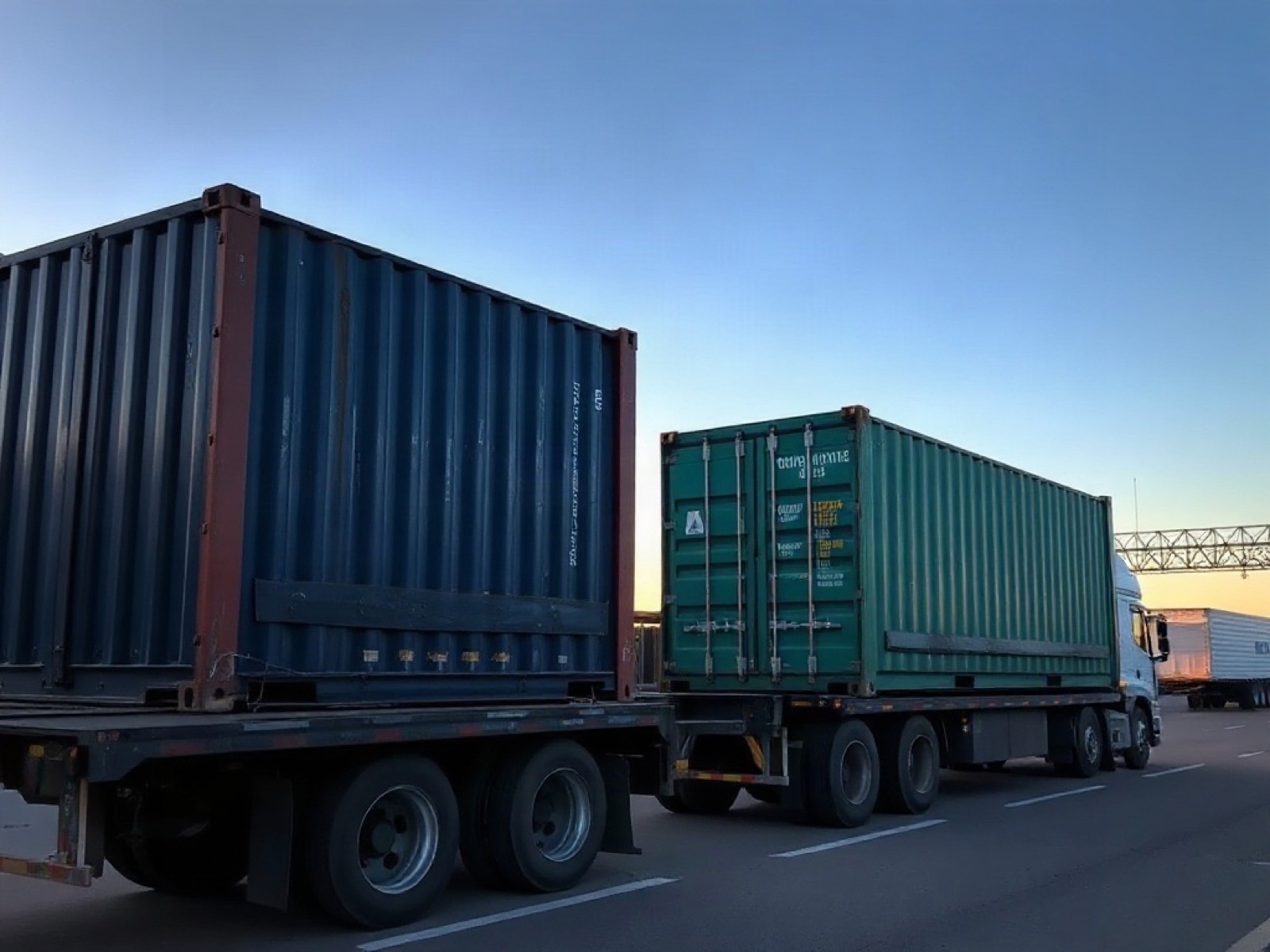
When a US or overseas supplier calls us, the first question is almost always the fee: what does a Mexican customs brokerage charge? Fair question, and it has an answer. The catch is that the brokerage fee is the smallest line on what your shipment will cost to enter Mexico, and the one that least explains why two quotes differ. Another line explains it, and almost nobody compares it. We will get there. First, what a real quote contains.
The three lines on a Mexican import quote
A serious quote for clearing goods into Mexico has three parts that should never be blended. First, government duties and taxes: the general import duty set by the tariff code, the customs processing fee (DTA) and Mexican VAT. That money goes to the government on the customs entry, the pedimento, not to the broker. Second, operating costs at the port: handling at the bonded facility, storage days, pre-inspection, electronic pre-validation, inland freight, cargo insurance if you buy it. Third, and smallest, the brokerage fee for preparing and filing the entry.
When someone quotes you "X per container" without separating those three, you do not know what you are comparing. That is why the answer to "what do you charge" is usually only the third line.
Duties and taxes: not negotiable, often miscalculated
The import duty depends on the Mexican tariff code of each product. It can be zero under USMCA for qualifying goods, or a double-digit rate without a treaty. The customs processing fee, the DTA, is 0.8 percent (8 per thousand) of the customs value on a standard definitive import, under Article 49 of Mexico's Federal Duties Law. Import VAT is 16 percent, calculated on the customs value plus the import duty plus other duties, per Article 27 of the VAT Law. So a wrong tariff code does not just change the duty: it changes the VAT base and drags everything with it.
No broker can lower these. What a broker can do is calculate them right before you ship, or wrong. That is line one. Line two is where quotes start to drift apart.
Operating costs: where identical fees stop being identical
Two brokerages with the same fee can cost you very different amounts because of what happens around the entry. Unloading and loading at the bonded facility. Storage days while a document is missing. A pre-inspection that catches a discrepancy before customs does. Freight from the port of entry to your customer's warehouse. These costs are real, charged by third parties and backed by invoices.
- Ask whether handling is included and how many storage days are covered.
- Ask whether the goods are pre-inspected and what happens if a discrepancy is found.
- Ask whether delivery to the final address is inside the quote or separate.
- Ask for every third-party cost to come with its invoice at closing.
A quote with a very low fee and none of this itemized is not cheaper. It just moves the costs to later. And there is still the line that decides the final number.
The brokerage fee: what it covers and what it does not
The fee is not regulated; each brokerage sets its own, usually as a percentage of the goods' value or a flat amount per entry. It covers preparing and validating the pedimento, representing the shipment before Mexican customs, tariff classification and document review. It normally does not cover getting your buyer into a sector-specific importer registry, obtaining NOM certification, labeling, prior permits, or acting as importer of record when the buyer is not registered. Those are quoted separately, and they should be, because not every shipment needs them.
The line that decides the cost, and almost nobody compares
You have seen the three lines. Here is what years of reading other people's quotes taught us: what moves the total cost of an import most is neither the fee nor the handling. It is the tariff classification, and who answers for it. A wrong code can charge a duty that did not apply, demand a NOM certificate that was not required, or miss a permit that was. The difference lands on the taxes, the big line, and on storage days while the entry is corrected.
So the better question is this: who classified my goods, with what information, and who is responsible if it was wrong? At CEAL we classify before the goods ship, from the technical datasheet, and put the duties and the requirements that apply in writing, with the three lines separated. That way, when you compare our quote with another one, you are comparing the same thing.
How to request a quote you can compare
- Send the technical description, not just the catalog name: material, use, composition, whether it has a motor or battery.
- State the country of origin and the terms of sale: whether your price includes freight and insurance.
- Ask for the three lines separately: government charges, port costs and brokerage fee.
- Ask which requirements apply to your product: NOM standards, permits or importer registries, so you know what will be asked of you.
With that, any serious brokerage can give you a number that means something. If you want ours, send those four items on WhatsApp and we return an itemized quote. Now you know which line to look at.
Official sources: Ley Federal de Derechos, Article 49 (latest reform DOF 07-11-2025) and Ley del IVA, Articles 1 and 27. Checked October 27, 2026.
Does the brokerage fee include Mexican VAT?
The fee itself is a service and carries 16 percent VAT, separate from the import VAT paid on the entry.
Who pays the duties, the supplier or the buyer?
They are paid on the pedimento by the importer of record in Mexico. In practice the brokerage pays them with funds advanced by the importer and returns the payment receipt.
Do fees change by port of entry?
Port costs do, because bonded facilities and handling differ by port. The fee and the government charges are calculated the same way.